Notes on the Histories of Recordkeeping
Most recent:
-
For-profit scholarly publishers are degrading the paragraph
What happens to manuscripts when tech-focused companies publish scholarly journals according to their for-profit logic? Unsatisfactory quality. I would like to share my recent experience of the production process as an example, and provide a warning to prospective authors. For me, the publisher was Springer Nature, which produces thousands of journals. Actual production of accepted…
-
A prospetto of 1803: records classification from Austrian Lombardy to the Napoleonic Kingdom of Italy
Abstract: This article provides a history of the records classification scheme that launched modern records management systems in Italy. It describes the government administrative reforms in Austrian Lombardy (1749-1796) and during the Napoleonic period (1796-1814), when institutional and bureaucratic transformations were energized by an emerging administrative discipline. The techniques of exercising public power and the…
-
A Minor Inventory
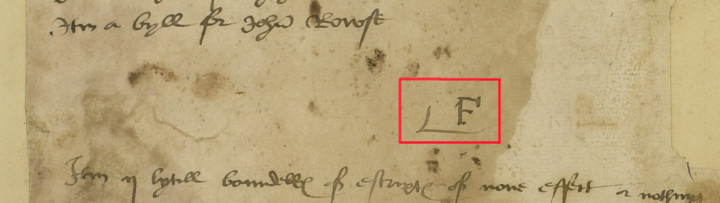
“We have here greit nede of clerkes…” William Brabazon in Ireland to Thomas Cromwell, via William Body, October 1536 (SP 60/3 203v) This communication, from one servant of the king to another, carried by one in private service, reflects a larger mid-sixteenth century need for secretarial labour. Projecting sovereign power by the written word was…
All posts:
-
Chaucer’s Customs Petition: Introduction
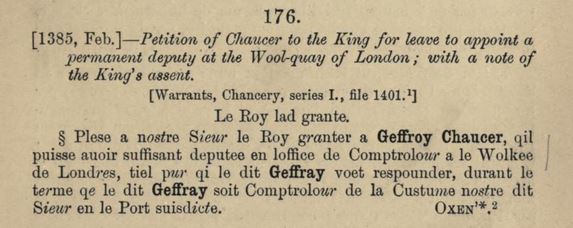 Read more: Chaucer’s Customs Petition: Introduction
In 1385 Geoffrey Chaucer, who held the office of controller of wool customs at London, requested permission from the king to appoint a sufficient deputy for as long as he held the office. The following is the text of his petition to Richard II preserved in the UK National Archives [C81/1394/87], published in Life-Records of…
-
Chaucer’s Customs Petition: (part 2) the Writers
 Read more: Chaucer’s Customs Petition: (part 2) the Writers
Adam A reproduction of Chaucer’s 1385 petition is published in The British Inheritance: A Treasury of Historic Documents, from which the following images were made. The caption to the reproduction states in part: “It is probable that one of these hands is Chaucer’s, but it is impossible to say which.” (p.31) This is clearly mistaken.…
-
1292 Bills in Eyre
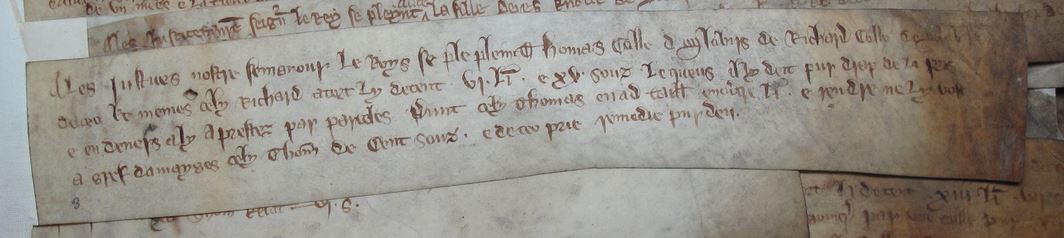 Read more: 1292 Bills in Eyre
In 1292 the English king’s justices at Shrewsbury in Shropshire heard the complaint of Thomas Colle of Shropshire against his brother who owed him money. He brought his legal action before the itinerant and omni-competent Justices of the General Eyre. Since the 12th century English kings had intermittently sent judges out on these visitations to…
-
1259 – An Early (and Late) Bill in Eyre
 Read more: 1259 – An Early (and Late) Bill in Eyre
In the mid-thirteenth century, the foolishness of a king of England, heavily in debt and obligated to the pope for a military adventure in Sicily, forced him to bargain away his domestic power in the hopes of financial relief. Thus, in 1258, a group of peeved magnates with the support of the nobility took over…
-
The Peasants’ Revolt
Read more: The Peasants’ RevoltThe English Peasants’ Revolt of 1381 has a continuously re-envisioned history. An event with the appeal of an extraordinary and dramatic social revolution cannot hide from interpretation and narration. The story was once solely reliant on a handful of narratives written by contemporary or near-contemporary writers, but since the 19th century historians have relied also…
-
Cranmer’s letter to Henry VIII
Read more: Cranmer’s letter to Henry VIIIThere are two extant letters handwritten by Archbishop Cranmer to Henry VIII which are worded almost the same, addressed, sealed and delivered on the same day in 1533.¹ The appearance of these two near clones in the King’s secretary’s record-keeping system is a strange sight and can seem somewhat bewildering. However, a comparison of the…
-
Cromwell’s Records – Incoming Correspondence to 1535
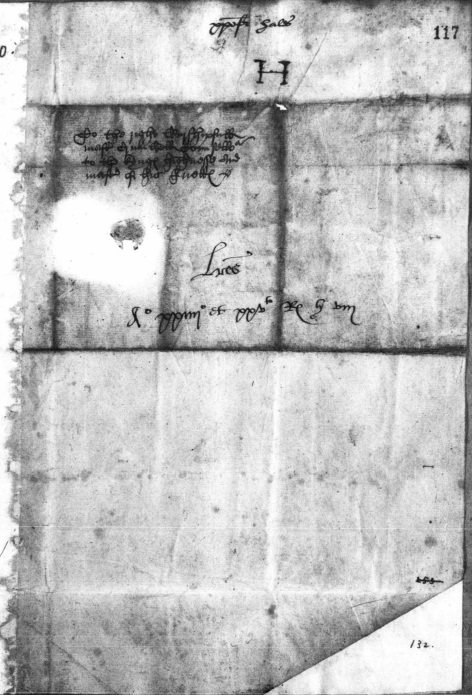 Read more: Cromwell’s Records – Incoming Correspondence to 1535
If one had an interest in the government record-keeping practices of Tudor England the documentary source one would naturally turn to is the collection of State Papers housed in the National Archives.* The nature of their present organization however, an artificial collection of chronological order from a variety of records creators, frustrates any understanding. The…
-
Cromwell’s Records – Filing Annotations
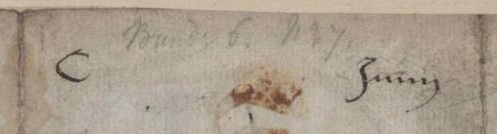 Read more: Cromwell’s Records – Filing Annotations
1534 seems to be a transitional period for the manner in which Thomas Cromwell’s incoming correspondence was managed. Investigating starts at the back of these letters, the thicket of signs acquired over 500 years: folio numbering, dating, annotations of subjects, names and matters. At the bottom layer of this thicket is the letter-writer’s superscription, and…
-
Lists and Inventories
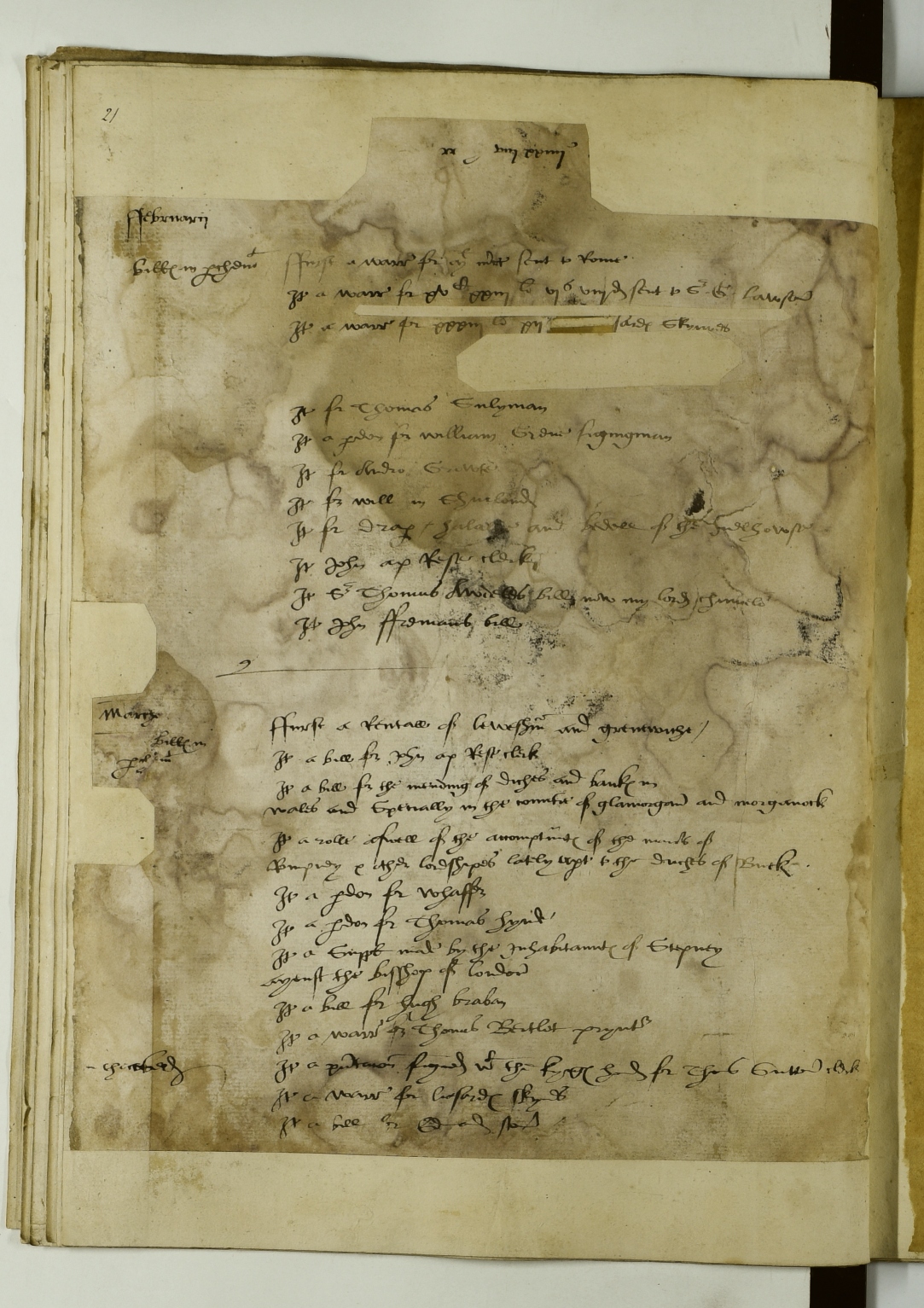 Read more: Lists and Inventories
My introduction to document listing practices in Thomas Cromwell’s office can be found at Postcards from the Past – The National Archives published as part of the International Conference on the History of Records and Archives (ICHORA) 2022.
-
A Minor Inventory
 Read more: A Minor Inventory
“We have here greit nede of clerkes…” William Brabazon in Ireland to Thomas Cromwell, via William Body, October 1536 (SP 60/3 203v) This communication, from one servant of the king to another, carried by one in private service, reflects a larger mid-sixteenth century need for secretarial labour. Projecting sovereign power by the written word was…
-
A prospetto of 1803: records classification from Austrian Lombardy to the Napoleonic Kingdom of Italy
Read more: A prospetto of 1803: records classification from Austrian Lombardy to the Napoleonic Kingdom of ItalyAbstract: This article provides a history of the records classification scheme that launched modern records management systems in Italy. It describes the government administrative reforms in Austrian Lombardy (1749-1796) and during the Napoleonic period (1796-1814), when institutional and bureaucratic transformations were energized by an emerging administrative discipline. The techniques of exercising public power and the…
-
For-profit scholarly publishers are degrading the paragraph
Read more: For-profit scholarly publishers are degrading the paragraphWhat happens to manuscripts when tech-focused companies publish scholarly journals according to their for-profit logic? Unsatisfactory quality. I would like to share my recent experience of the production process as an example, and provide a warning to prospective authors. For me, the publisher was Springer Nature, which produces thousands of journals. Actual production of accepted…
 What is a Petition?